

Embarking on the challenging path to sobriety, individuals can find transformative strength in the collective support of group settings. Group therapy activities transcend the boundaries of traditional talk therapy by incorporating interactive experiences that cultivate connection, self-awareness, and skill development.
This article explores the dynamic and diverse world of group therapy activities, delving into the crucial role these exercises play in addiction treatment programs.
Icebreakers and Trust-Building Exercises
Icebreakers like “Two Truths and a Lie” or “Would You Rather” encourage group members to interact, share personal experiences, and build connections in a relaxed setting. These activities help participants feel more comfortable and invested in the group’s progress.
Trust-building exercises focus on developing communication skills, such as active listening and using “I” statements, which promote open and constructive feedback. By fostering a safe environment where individuals can express themselves without judgment, these exercises allow group members to establish deeper connections and build trust.
The positive tone set by icebreakers and trust-building activities lays the foundation for more meaningful discussions and growth throughout the therapy sessions.
For individuals looking for comprehensive addiction treatment in a supportive environment, the IOP for addiction recovery in Cedar Rapids, Iowa provides a unique chance to participate in these life-changing group therapy activities.
Psychoeducation Activities
Psychoeducational group activities help you recognize symptoms of mental health issues, facilitating earlier intervention and promoting proactive management of your well-being. Engaging in these activities fosters a sense of community as you share experiences and insights with other group members, reinforcing the idea that you’re not alone in your struggles.
By enhancing your knowledge about mental health, psychoeducational activities contribute to personal growth, self-awareness, and the development of healthier coping mechanisms. They provide a foundation for understanding and addressing your challenges, empowering you to take control of your mental well-being.
Skill-Building Exercises
Through carefully designed group activities, you’ll have the opportunity to enhance your social and communication skills, boosting your confidence in interpersonal interactions.
Role-playing and active listening drills will help you practice effective communication techniques while receiving constructive feedback from your peers and therapist. As you engage in these skill-building exercises, you’ll focus on developing emotional intelligence, enabling you to better recognize and manage your emotions and those of others.
Problem-solving tasks within the group setting will encourage collaboration and teamwork, honing your critical thinking and decision-making abilities.
Expressive Arts Therapy
By combining creative processes like painting, drawing, and music with psychological principles, you can explore your thoughts and feelings in a non-verbal way. This allows for deeper insights and transformative experiences.
Engaging in expressive arts therapy as part of group therapy activities helps reduce anxiety and depression, promoting overall mental well-being. It’s beneficial for people of all ages, providing a safe space to process complex emotions and traumatic experiences.
When you participate in group expressive arts activities, you’ll build connections with other members and foster a sense of community. You’ll develop trust and support networks as you share in creative experiences together. Here you can read more about the different types of group therapy for addiction treatment.
Peer Support Activities
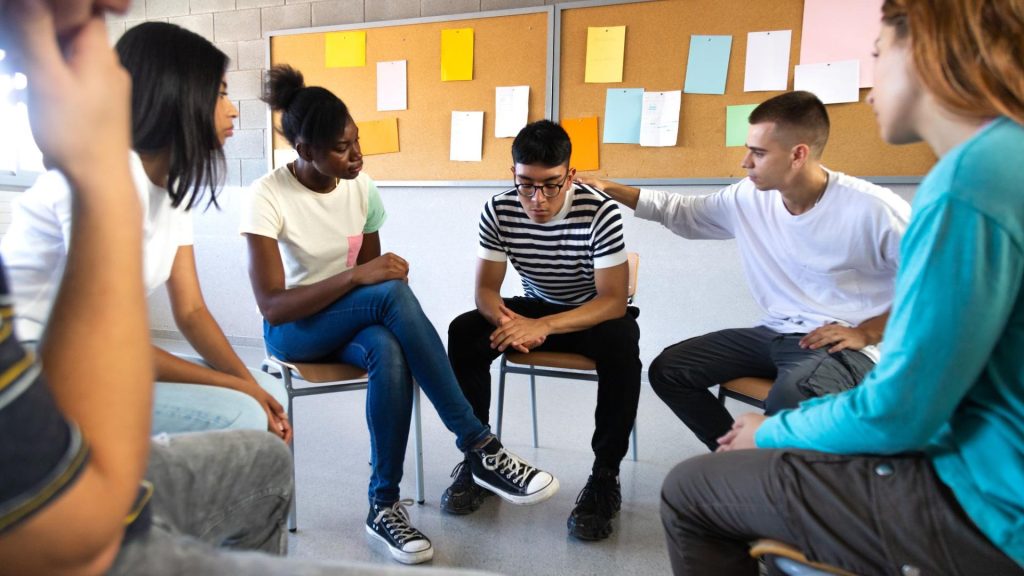
In these group settings, you’ll find that sharing personal experiences with others who’ve faced similar challenges can be incredibly validating and empowering.
As individuals engage in peer support, they create an atmosphere where they feel safe to open up and be vulnerable. These activities provide a platform for fostering empathy, understanding, and a strong sense of belonging among group members.
Through peer support, you’ll likely discover that you’re not alone in your struggles, and that realization can be immensely comforting. Witnessing the progress and resilience of your peers can also inspire and motivate you on your own journey of personal growth.
The bonds formed during these activities often extend beyond the therapy sessions, creating a supportive network that you can rely on for ongoing emotional reinforcement. Another option you should explore are volunteer ideas for people in recovery.
Mindfulness and Relaxation Techniques
Incorporating mindfulness and relaxation techniques into group therapy sessions can have a profound impact on participants’ emotional well-being and overall therapeutic experience.
When you engage in practices like deep breathing, guided meditation, and body scans, you’re promoting emotional regulation and self-awareness.
These mindfulness activities help you focus on the present moment, allowing you to fully engage in the group therapy process and reap its benefits.
Final Thoughts from Radix Recovery
At Radix Recovery, we recognize that the journey to recovery is a deeply personal experience, yet profoundly influenced by the power of community.
Our IOP incorporates a variety of evidence-based group therapy activities designed to address the unique needs of individuals in recovery. We create a safe space where participants can openly share their experiences, challenges, and successes without fear of judgment. From skill-building exercises to expressive therapies, each activity is carefully crafted to support your path towards a healthier, substance-free life.